
Therapy
Enhanced engagement and focus: The sensory stimuli used in LSV, such as sounds, lights, and vibrations, capture participants’ attention and increase their engagement in therapy sessions. This heightened sensory engagement can promote focus, help individuals stay present in the therapeutic process, and reduce distractions.
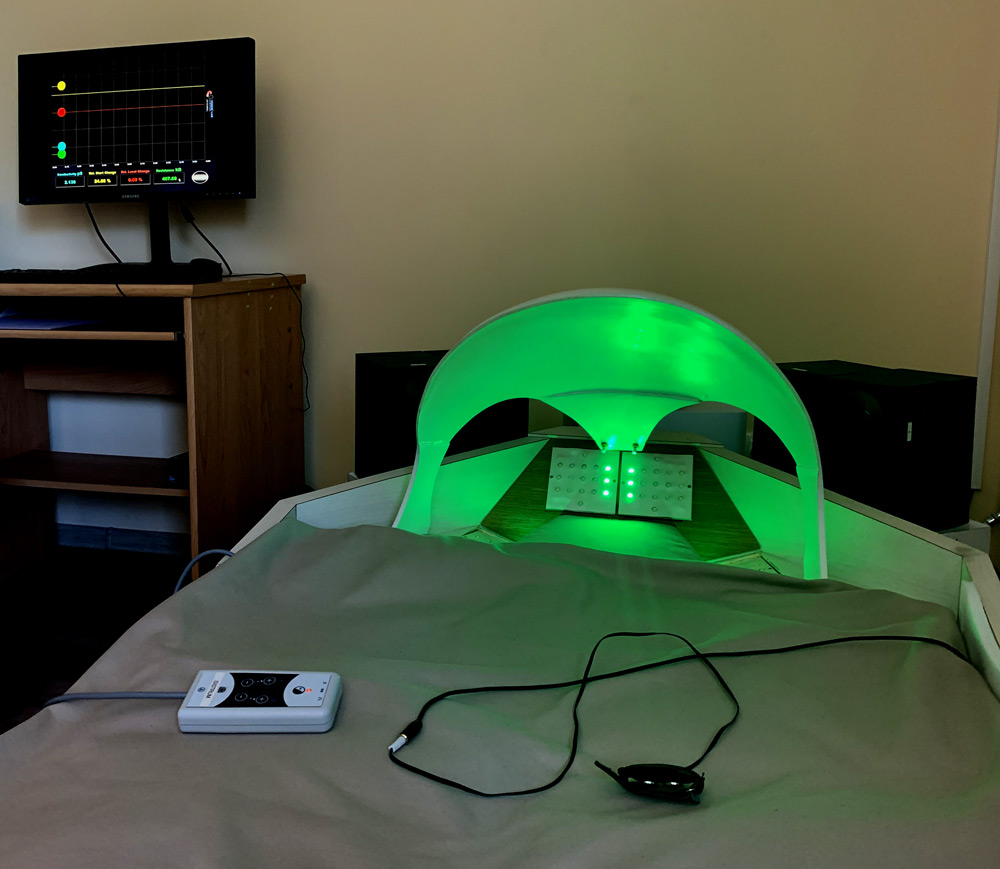
Photo: single bed installation in Pedagogical and Psychological Counseling Center of the Vilnius region, Lithuania.
Regulation of physiological responses: The sensory cues provided through LSV can be designed to elicit specific physiological responses, such as relaxation or stress reduction. By associating these stimuli with desired states, individuals can learn to regulate their physiological responses and achieve therapeutic goals. The loop reinforcement aspect of MindPeace strengthens this association and facilitates self-regulation of emotions, stress levels, and arousal.

Multi-sensory integration: LSV incorporates multiple sensory modalities simultaneously, stimulating different senses such as hearing, vision, and touch.
This multi-sensory integration enhances the therapeutic experience, as it engages various neural pathways and can facilitate deeper emotional and cognitive processing.
Positive conditioning and emotional associations: Through the loop reinforcement process, individuals develop positive associations between the sensory stimuli and desired therapeutic outcomes. The repeated pairing of sensory cues with positive emotional states can create conditioned responses, making it easier to access those states in future therapy sessions or daily life. This positive conditioning can contribute to emotional regulation and well-being.
Facilitation of emotional expression and exploration: The sensory stimulation in LSV can provide a non-verbal avenue for emotional expression and exploration. Some individuals may find it challenging to express emotions verbally, but the sensory cues can evoke emotional responses that can then be addressed in therapy. This allows for alternative modes of communication and can enhance the therapeutic process.

Safety and containment: Trauma therapy requires creating a safe and contained environment for individuals to explore and process traumatic experiences.
The sensory stimuli in LSV, such as gentle vibrations, soothing sounds, and calming lights, can provide a sense of safety and containment. These stimuli can help regulate arousal levels, reduce anxiety, and create a secure space for trauma work.
Regulation of nervous system responses: Trauma often dysregulates the nervous system, leading to hyperarousal, hypervigilance, or dissociation. The sensory cues used in LSV can be tailored to modulate and regulate physiological responses, promoting relaxation and grounding.
By associating the sensory cues with a sense of calm and safety, individuals can learn to self-regulate their nervous system responses and manage trauma-related symptoms.

Window of tolerance expansion: Traumatic experiences can narrow an individual’s window of tolerance, making it difficult to cope with distressing emotions or triggers. LSV stimulation can help expand this window of tolerance by providing a controlled and manageable level of sensory input.
Gradual exposure to sensory cues within a supportive environment can increase resilience and the capacity to tolerate and process trauma-related material.
Accessing implicit memory: Traumatic experiences are often stored as implicit memories that are challenging to access and verbalize. Sensory stimuli used in LSV can tap into non-verbal, sensory-based memories, facilitating the expression and processing of trauma-related material. The sensory cues can evoke emotional and physiological responses that can be explored and integrated into the therapeutic process.

Group cohesion and support: GSR network group training programs offer a group setting where individuals with trauma histories can connect, share experiences, and provide support to one another. The collective experience of LSV creates a sense of belonging, validation, and understanding among group members.
Group cohesion and support can enhance the therapeutic process, foster resilience, and reduce feelings of isolation and shame commonly associated with trauma.



Supported by: