Empathic Encounters
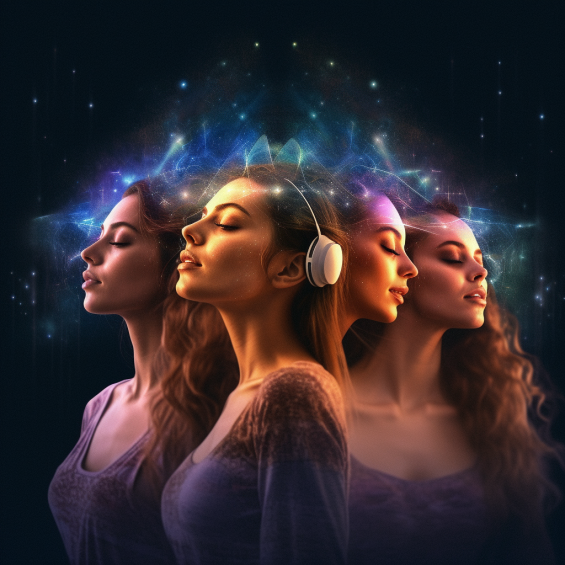
In today’s world we are losing what is the basis for our survival: Empathy.
This leads to problems, conflicts and wars.
Using modern theory and technology of psychointeractive systems (PI, 2001), a further development of biofeedback, we can measure the correlation of “emotional activation” between people. The technical setting is very simple: each person has two small electrodes on the fingers and the devices are connected to a computer.

The rest does specially adapted for the MuSES project VERIM software – which was originally designed for sports, human resources, therapy and educational training.
In first test runs we have encountered astonishing results: very often we get correlation factors between two people of more than 97%, especially between family members.
The high correlation is just objective proof of empathic abilities. Much more important is the process itself as we create artistic space for empathy. Some participants were having tears in their eyes, moved profoundly through their experience.
This shows that we humans are able to emphatically “resonate” on a deeper level.
When the GSR signal of participants is correlated in real time during a GSR network group training session that incorporates loop reinforcement through sound, light, and vibrations stimulation (LSV), it has many benefits:
- Synchronization and collective experience: Real-time correlation of GSR signals (rtc-GSR) creates a synchronized experience among participants. When participants’ GSR signals are correlated, it can foster a sense of connection and shared experience within the group. This synchronization can enhance group cohesion, promote a collective focus, and deepen the sense of unity during the training session.
- Social support and empathy: rtc-GSR allows participants to observe and empathize with each other’s physiological responses. This shared awareness of others’ responses can foster social support and empathy within the group. Participants may feel a sense of validation and understanding when they see that others are experiencing similar physiological reactions. This supportive environment can promote a sense of safety and trust, enhancing the effectiveness of the training.
- Collective regulation and learning: rtc-GSR enables participants to collectively regulate their physiological responses. As participants engage in self-regulation techniques, the group’s combined efforts may create a positive feedback loop, reinforcing relaxation and desired physiological states. This collective regulation can enhance the learning experience, as individuals can observe the impact of their self-regulation efforts on the group’s overall GSR patterns.
- Group coherence and resonance: rtc-GSR may lead to group coherence and resonance. Coherence refers to a state of physiological and psychological alignment within individuals, while resonance refers to the synchronization of physiological responses among group members. When participants’ GSR signals correlate, it may indicate a state of coherence and resonance within the group, fostering a sense of harmony and shared energy.
- Amplification of positive states: rtc-GSR during loop reinforcement through sound, light, and vibrations stimulation (LSV) can amplify positive states. When participants collectively reach a relaxed and regulated state, the accompanying sensory stimuli can reinforce and deepen that state for the entire group. This amplification can enhance the overall effectiveness of the training and support participants in achieving and sustaining positive physiological responses.
Supported by: